Its original name was Associação Fraternidade Operária, and it had a dual nature. As well as being a cultural and recreational society, it was also a kind of multi-trade union representing the working class of Santarém.
In fact, one of its first priorities, back in 1916, was to organise the local celebrations of International Workers’ Day, 1 May, thereby reviving a Santarém tradition that dated back to the 19th century.
As a trade union, the society took action on matters such as working hours, workplace accidents and unemployment. It also hosted countless workers' meetings, including a congress of rural workers' unions.
However, in that original form, the authorities of the time, under the First Republic, refused to grant it legal status. They even threatened to shut it down because it served as a meeting place for workers on strike.
It was not until 1923 that the society managed to obtain legal status, with new statutes and a new name: Grémio Recreativo Operário. That lasted until 1939, when Salazar’s dictatorship banned it from using that name and forced it to adopt the one it still holds today. The same happened at the time to the Grémio Literário Guilherme de Azevedo, one of the two associations that gave rise to today’s Círculo Cultural Scalabitano. This was because the dictatorship reserved the term ‘grémio’ (guild) for employers’ associations.
In 1945, S.R.O. became actively involved in the Grupo de Coordenação Cultural, a movement that promoted a range of activities across the city and the region, until the dictatorship dissolved it in 1947.
The dictatorship also banned the 1 May celebrations, and in this repressive climate the society found itself confined to recreational activities. Even so, it endured as a place for people to come together, with dances and live music and a variety of games, from cards to billiards and table tennis, most notably chinquilho, a traditional Portuguese disc-throwing game.
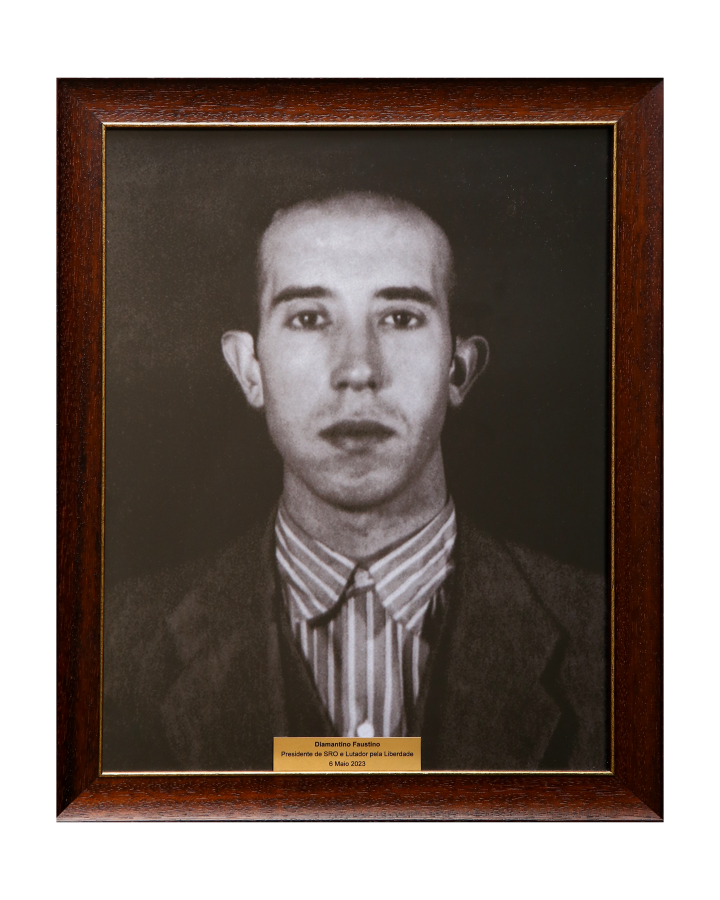
SRO was born in the aftermath of the revolution that, in May 1915, overthrew the dictatorship of General Pimenta de Castro. Most of its founders had supported the opposition to that regime, and several SRO members later stood out in the anti-fascist resistance. Some became political prisoners, just as others had been earlier, under the dictatorship of Colonel Sidónio Pais in 1918.
After the Carnation Revolution of 25 April 1974, S.R.O. went through a major renewal through ballroom dancing. It became a landmark of its time as a centre for teaching and promoting the discipline across the city and the region, winning national trophies and competing abroad.
And it was ballroom dancing that brought the first women onto its board, in 1990.